
Reliable Cold Storage for Fresh Produce
Fruit and vegetable storage requires more than simply maintaining a low room temperature. Different types of produce have different cooling, humidity and airflow requirements, and poor temperature control can lead to dehydration, weight loss, softening and reduced shelf life.
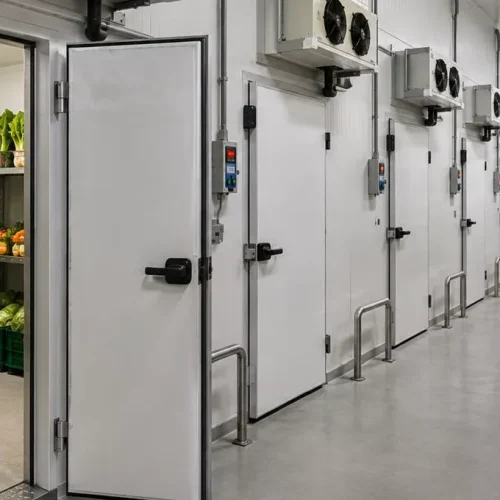
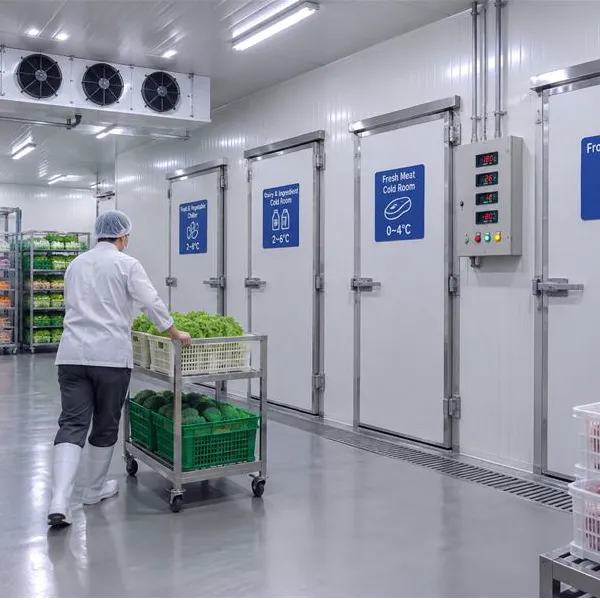
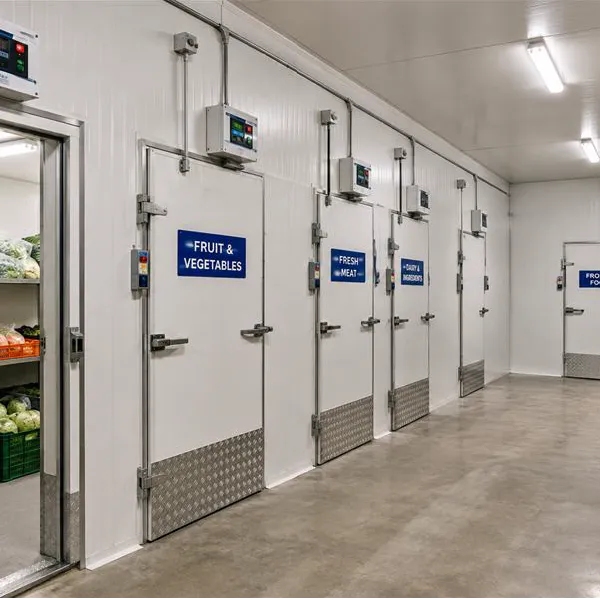
Instead of storing all products in one temperature zone, the facility was divided into separate chilled rooms to support different storage conditions and improve inventory management.
Configuration Overview
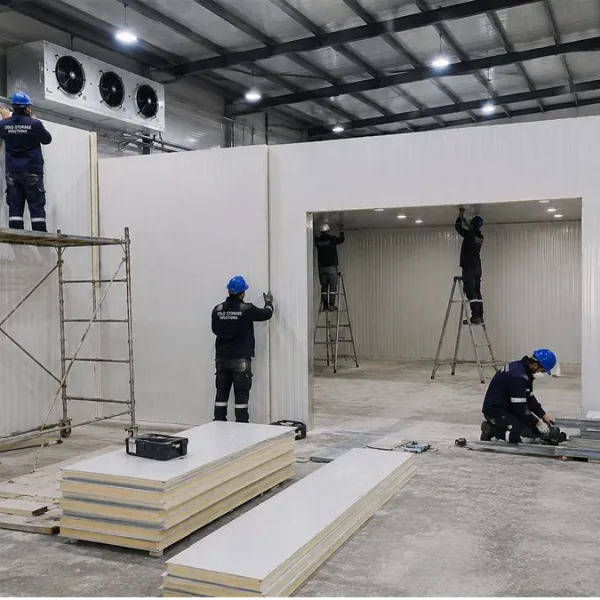
- Prefabricated cold storage panels for fast installation and reliable thermal insulation
- Insulated cold storage doors to reduce cold-air loss during daily operation
- A practical cold room control panel for convenient temperature monitoring
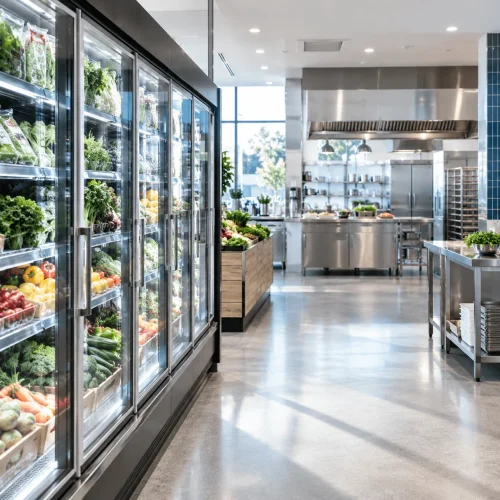
- Energy-efficient cold storage lighting to minimize unnecessary heat load
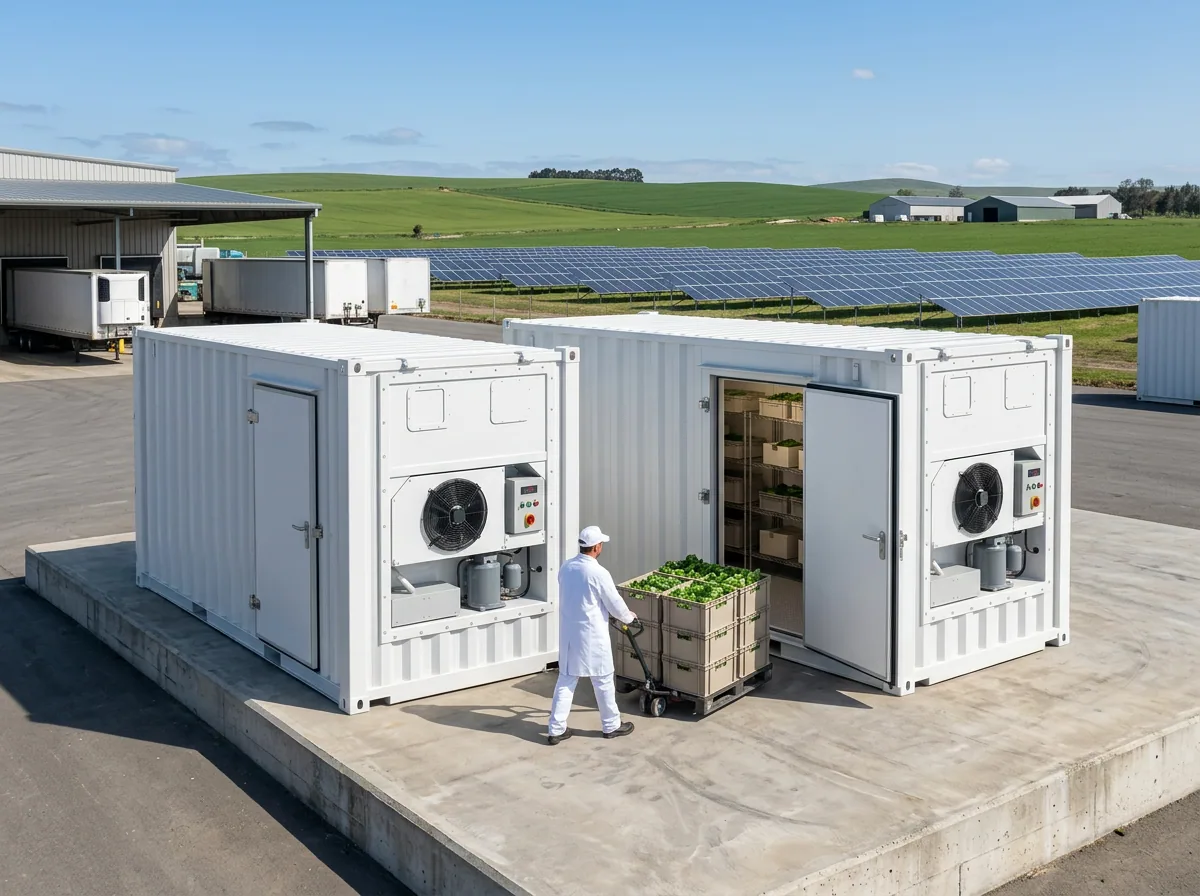
- Refrigeration equipment selected according to the cooling demand of each storage zone
From Installation to Operation
Configuration by Zone, Not by Default
The refrigeration system is selected according to actual operating conditions rather than using one standard configuration for every project. For small and medium-sized produce cold rooms, air-cooled piston condensing units or compact refrigeration units provide stable cooling and convenient maintenance.
Evaporator placement and airflow are carefully planned to maintain more even room temperatures while reducing direct cold-air impact on sensitive produce.
Beyond Equipment Price
For fruit and vegetable cold storage projects, buyers should evaluate temperature stability, insulation performance, energy consumption, moisture loss, maintenance access and future expansion. Before production, Raxlyn reviews room dimensions, panel thickness, door size, drainage, shelving clearance, electrical requirements and refrigeration capacity to help reduce unnecessary site modifications during installation.