
Supermarket & Retail Kitchens

Industrial Water Chiller for Reliable Process Cooling

  • Fresh
  • Durable
  • Customizable

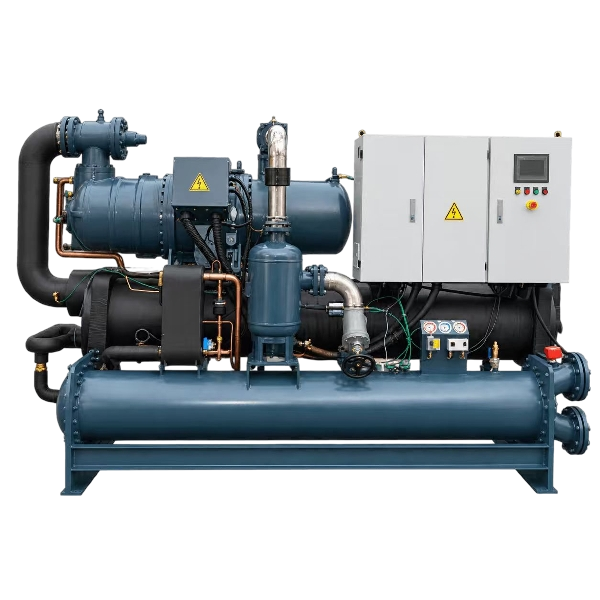
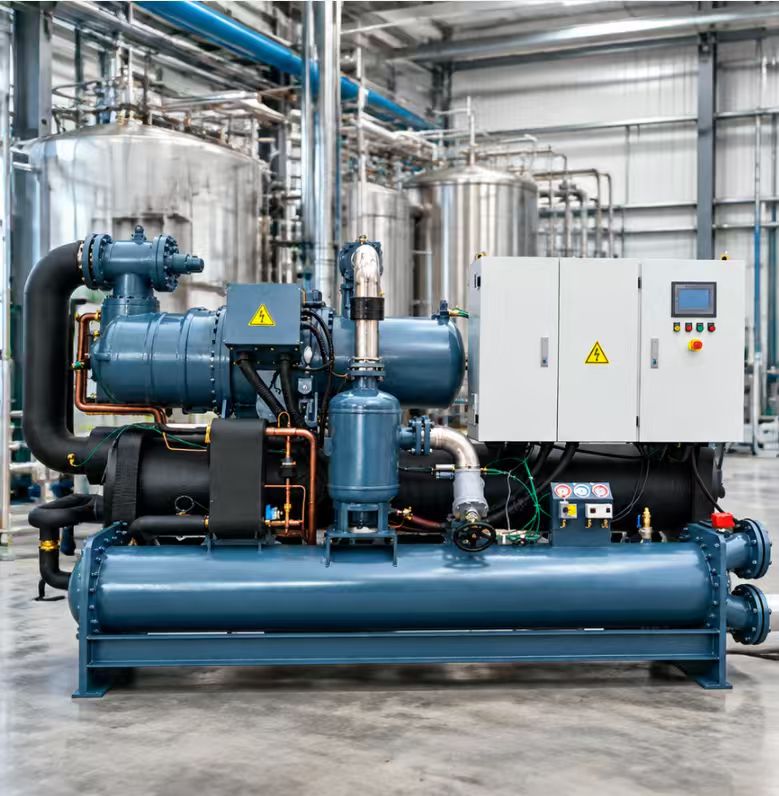
An industrial water chiller removes heat from circulating water to help maintain controlled temperatures for compatible manufacturing processes, production equipment, and industrial cooling systems.

  • Application Industrial process and equipment cooling
  • Configuration Confirm according to the selected model
  • Temperature-Controlled Cooling
  • Suitable for Industrial Loads
  • System-Based Configuration
  • Integration with Existing Equipment
  • Flexible Installation
  • Chilled or Frozen Transport
  • Portable Design
  • Power Flexibility
Industrial Water Chiller for Reliable Process Cooling Get a Quote
Overview

Industrial Water Chiller Design for Process Cooling

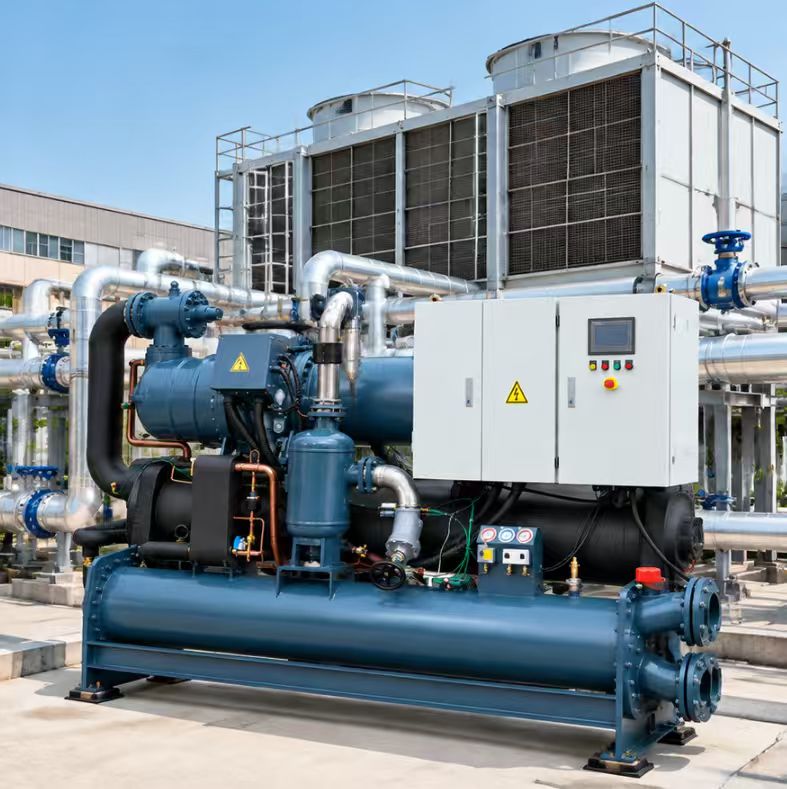
An industrial water chiller removes heat from a water circuit and supplies cooled water to compatible process equipment. In a typical vapor-compression system, refrigerant absorbs heat in the evaporator, is circulated by the compressor, and releases heat through the condenser before returning through the expansion device. The exact configuration and performance depend on the selected model and its design conditions. For reliable selection, buyers should confirm the required cooling load, target water temperatures, flow rate, installation environment, and available utilities.
View Specifications
Containerized cold room being crane-lifted onto a concrete base at a distribution site
  • Cooling for Manufacturing Processes

    Chilled water can be used to remove unwanted heat from production equipment and process systems. Suitability depends on the process temperature range, heat load, operating hours, and the water quality requirements of the application.

  • Refrigeration Circuit and Heat Transfer

    A typical chiller uses an evaporator, compressor, condenser, and expansion device to transfer heat from the water circuit to the surrounding environment or a separate heat-rejection circuit. The specific component arrangement should be confirmed from the selected unit documentation.

  • Selection Based on Cooling Load

    Correct sizing starts with the heat load and the required water supply and return temperatures. Water flow, ambient conditions, operating schedule, and any load fluctuations should also be considered to avoid selecting an unsuitable unit.

  • Controls and Site Integration

    Control functions, electrical requirements, water-side connections, and monitoring options vary by model. Before ordering, confirm the available supply voltage and frequency, control interface, connection sizes, and any required communication or safety functions.

  • Installation and Routine Maintenance

    Provide a stable foundation, adequate service clearance, and access for inspection. Follow the manufacturer’s instructions for checking the water circuit, strainers, heat-transfer surfaces, electrical connections, refrigerant circuit, and safety devices.

Specifications

Technical Specifications

Reference configuration for the two standard sizes. Dimensions, refrigeration capacity and electrical supply are confirmed for each project in the quotation drawing.

Parameter

Specification

Product Name

Industrial Water Chiller

Cooling Capacity

Confirm from selected model datasheet

Chilled-Water Inlet Temperature

Confirm for the application

Chilled-Water Outlet Temperature

Confirm for the application

Water Flow Rate

Confirm from design requirements

Heat-Rejection Method

Confirm whether air-cooled or water-cooled

Refrigerant

Confirm from selected model datasheet

Power Supply

Confirm voltage, phase, and frequency

Control System

Confirm available control configuration

Water Connections

Confirm connection size and type

Overall Dimensions and Weight

Confirm from selected model datasheet

Operating Ambient Conditions

Confirm the permitted operating range

Configurations

Configured Around
What You Store

Choose the temperature version first, then add the upgrades your site and product need. Every option is built and tested in the factory, not retrofitted on site.

  • 0 → +15 °C

    Chilled Storage

    Fruit, vegetables, flowers, dairy and beverages — humidity-friendly air distribution.

    01
  • −18 → −25 °C

    Frozen Storage

    Meat, seafood, ice cream and frozen food, with heated door frames and pressure relief.

    02
  • Down to −40 °C

    Blast Freezer

    High-capacity unit and airflow for fast pull-down of fresh product to core temperature.

    03
  • Chill + Freeze

    Dual-Zone Room

    An insulated partition splits a 40HQ into two rooms, each with its own refrigeration.

    04
For an Accurate Quotation, Please Provide:

Based on this information, the cold storage box and refrigeration configuration can be matched to the buyer’s vehicle and operating conditions.

  • Required internal or external box dimensions
  • Required storage temperature
  • Type of products to be transported
  • Vehicle type and cargo area dimensions
  • Required quantity
  • Available power supply
  • Daily operating time
  • Local ambient temperature
  • Required battery or solar configuration
Applications

Where It Works Best

The Portable Cold Storage Box for Tricycles, Vans & Pickup Trucks is suitable for transporting and storing temperature-sensitive products such as:

How We Deliver

From Inquiry to Cold Storage

  1. 01

    Requirement Review

    Product, target temperature, daily loading and site power supply.

  2. 02

    Design & Quotation

    Heat-load calculation, layout drawing and a configured quotation.

  3. 03

    Production & Testing

    Built in our factory and pull-down tested before it is released.

  4. 04

    Shipping & Documents

    Ships as a standard container with export and customs paperwork.

  5. 05

    Start-Up Support

    Remote commissioning guidance and long-term spare parts supply.

FAQ

Frequently Asked Questions

  • What is an industrial water chiller used for?

    It removes heat from circulating water to support temperature control for compatible industrial processes and production equipment. The appropriate model depends on the process heat load and required water temperatures.

  • How do I choose the right chiller capacity?

    Determine the process heat load, water inlet and outlet temperatures, required flow rate, operating hours, and site conditions. Provide these details to the supplier for a model recommendation.

  • Is this model air-cooled or water-cooled?

    The referenced page does not clearly specify the heat-rejection method in its accessible text. Confirm whether the exact model is air-cooled or water-cooled before preparing the final specification.

  • Which technical details should be confirmed before ordering?

    Confirm cooling capacity, water temperatures, flow rate, refrigerant, power supply, control configuration, connection sizes, dimensions, weight, and operating conditions against the selected model datasheet.

  • Can an industrial water chiller be integrated with existing equipment?

    Integration may be possible when the cooling load, water-side connections, electrical supply, controls, and operating range are compatible. Check the interface requirements before installation.

Start Your Project

Tell Us What You Store.
We'll Engineer the Cold.

Send your storage temperature, room size and location — our engineers reply with a configured solution and quotation within 24 hours.

  • Free Equipment Selection
  • Custom System Design
  • Response Within 24 h