
Supermarket & Retail Kitchens

Air-Cooled Condenser for Commercial and Industrial Refrigeration

  • Fresh
  • Durable
  • Customizable

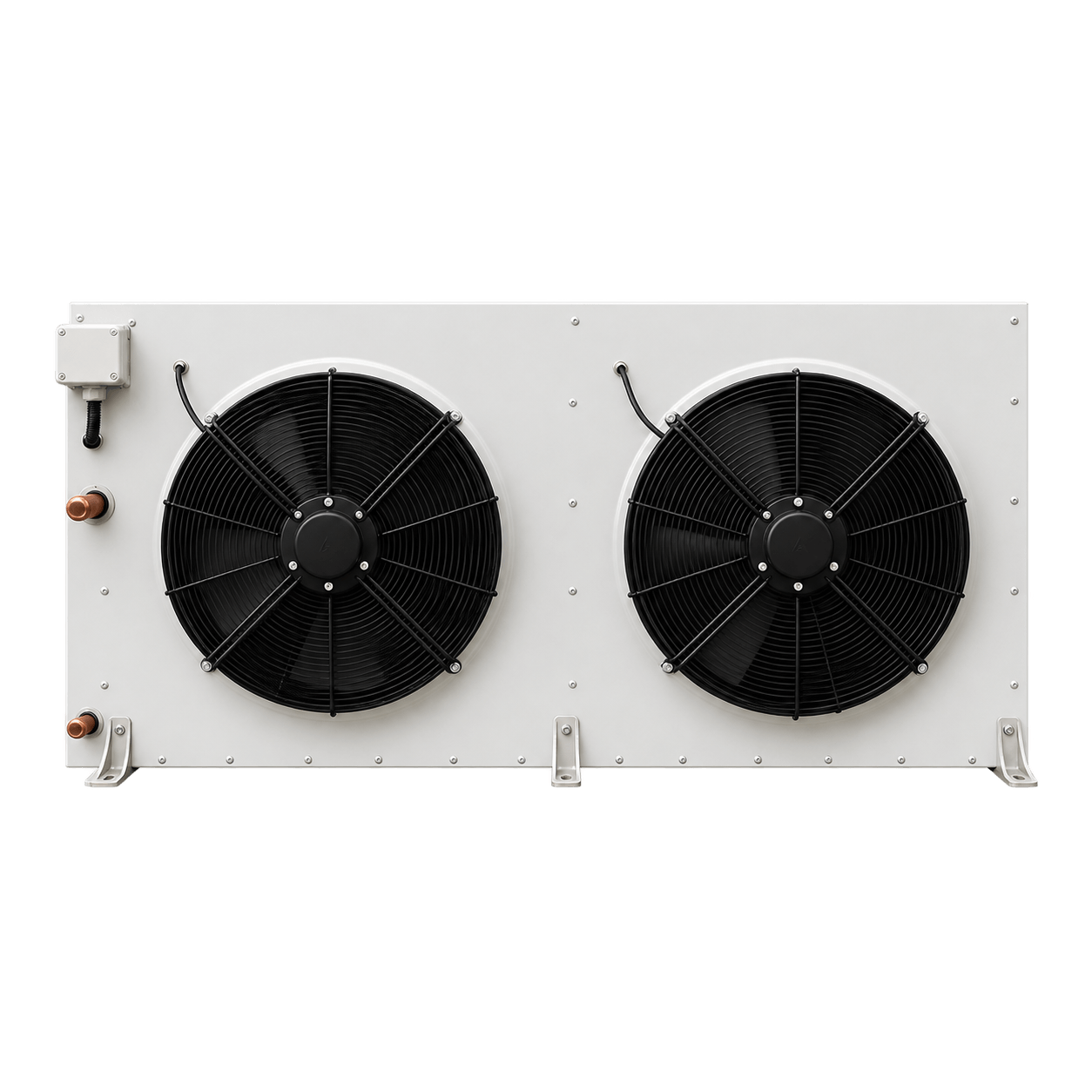
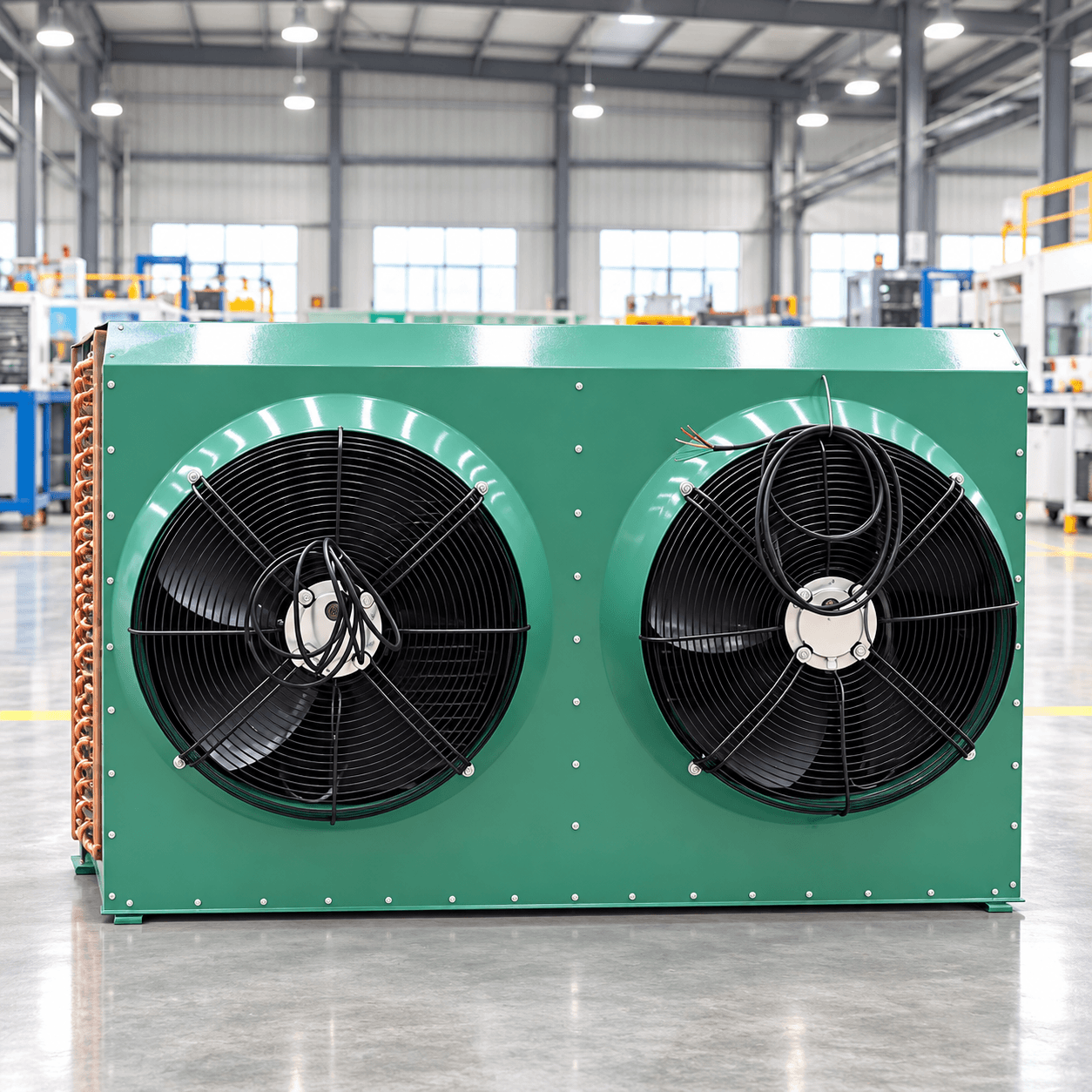
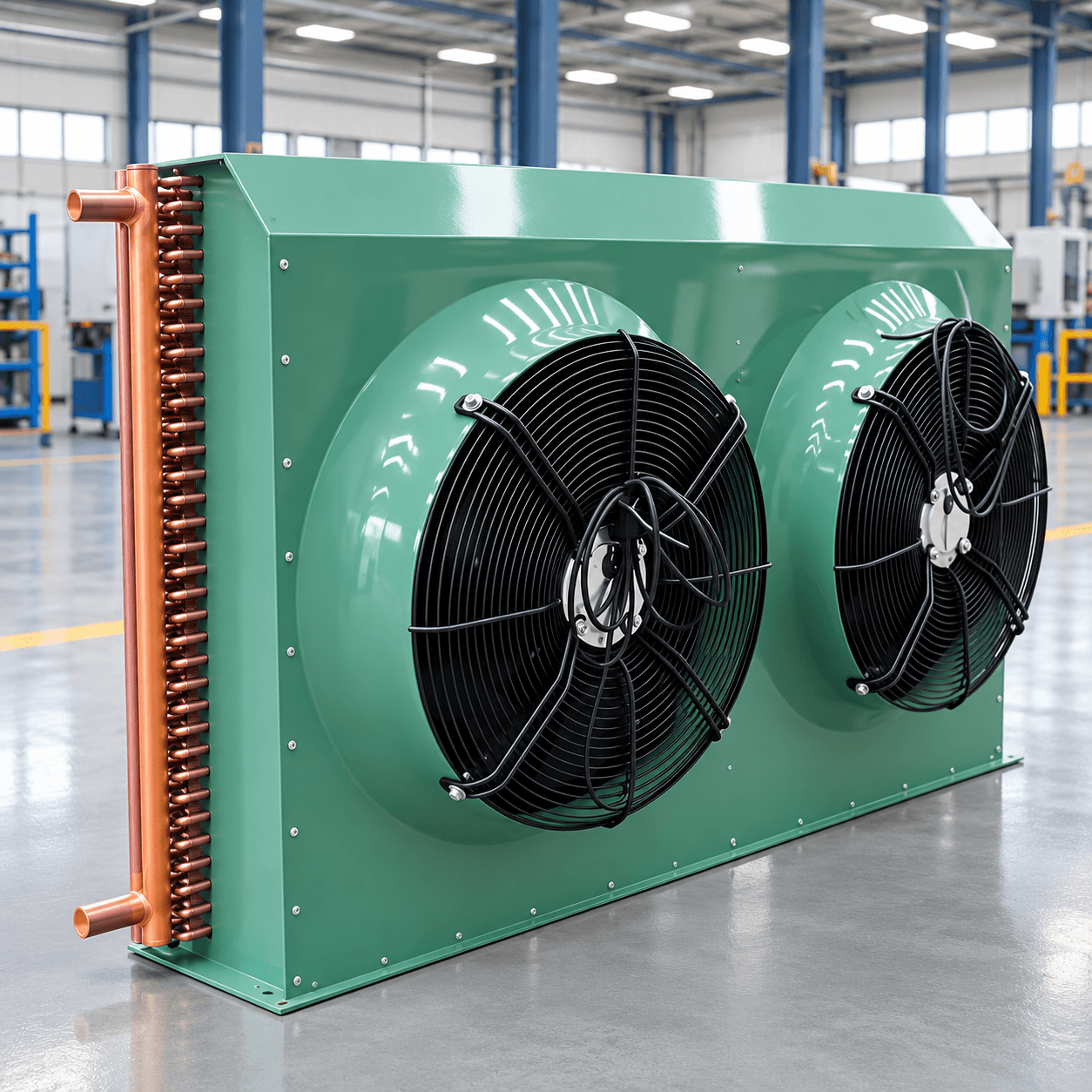
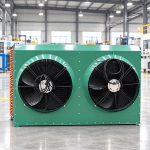
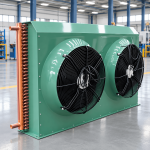
This air-cooled condenser uses axial fans to move ambient air across a finned heat-exchange coil, helping reject refrigerant heat without requiring a dedicated condenser-water circuit.

  • Heat Rejection at Δt = 15 K 11,880–59,500 W across the listed models
  • Heat Exchange Area 33–170 m² across the listed models
  • Air-Cooled Heat Rejection
  • Multiple Fan Arrangements
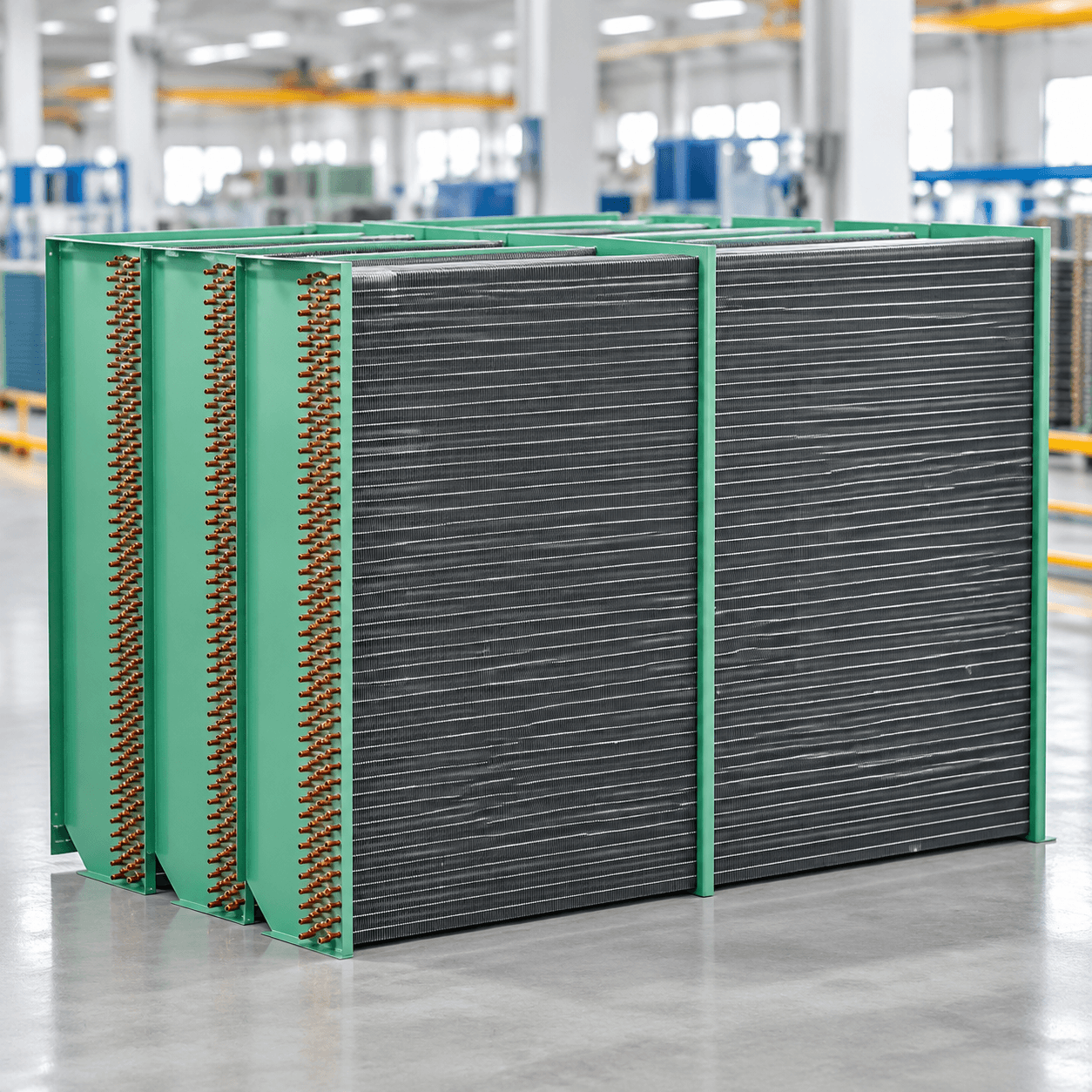
  • Copper-Tube and Fin-Coil Construction
  • Model Range for Project Selection
  • Flexible Installation
  • Chilled or Frozen Transport
  • Portable Design
  • Power Flexibility
Air-Cooled Condenser for Commercial and Industrial Refrigeration Get a Quote
Overview

An Air-Cooled Condenser for Refrigeration Heat Rejection

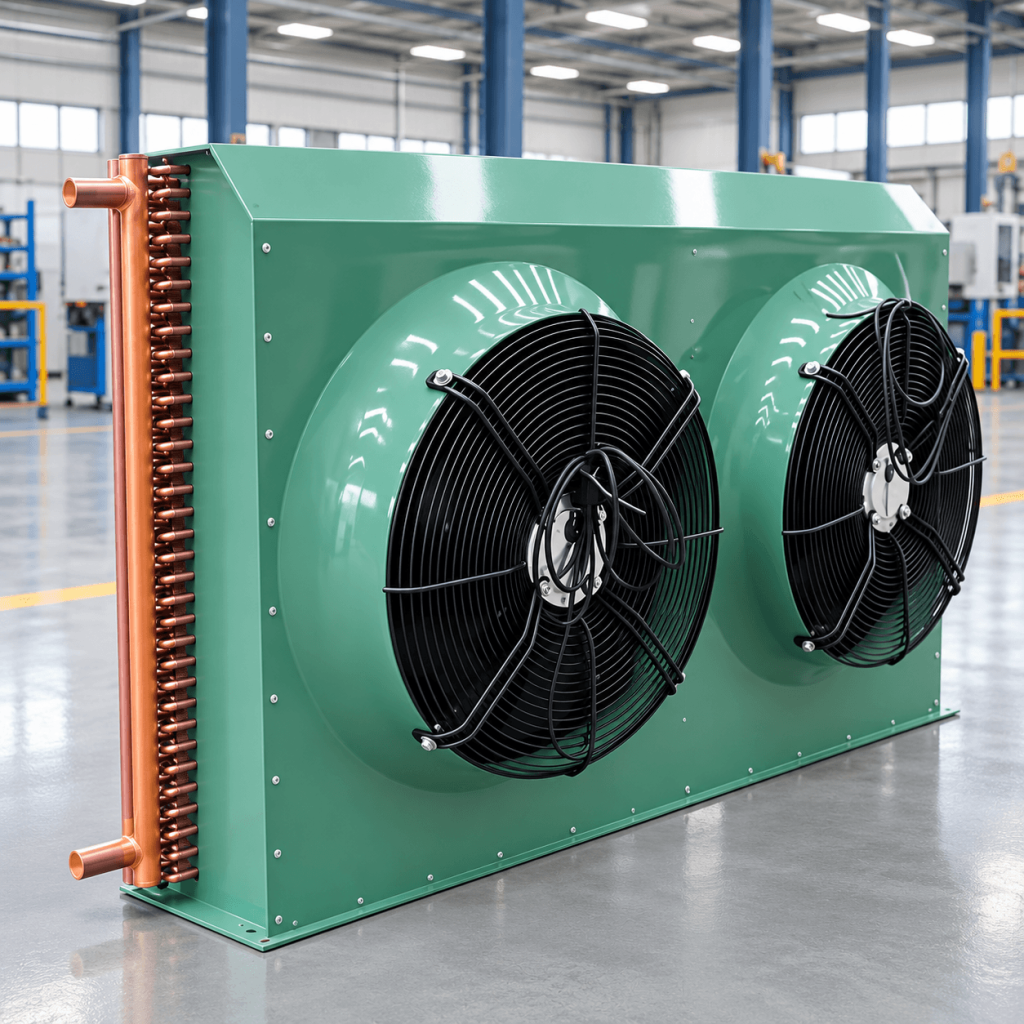
An air-cooled condenser removes heat from refrigerant vapour by transferring it through a heat-exchange coil to ambient air. Axial fans create airflow across the coil surface, allowing the refrigerant to condense when the system operates within its design conditions. This type of condenser can be useful where a cooling-water circuit is undesirable or unavailable. Model selection should consider rated heat rejection, ambient temperature, refrigerant conditions, airflow, electrical supply and installation space.
View Specifications
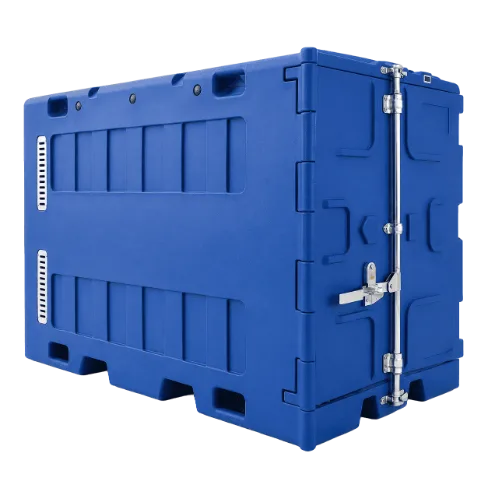
Containerized cold room being crane-lifted onto a concrete base at a distribution site
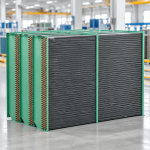
  • Finned Coil Heat Exchange

    The finned coil increases the surface available for heat transfer between the refrigerant circuit and moving air. Actual performance depends on coil design, airflow and the specified operating conditions.

  • Forced-Air Fan System

    Axial fans move air across the coil to carry rejected heat away from the equipment. Fan quantity, diameter, airflow and power vary across the model range.

  • Flexible Model Configurations

    The source table lists models with heat-exchange areas from 33 m² to 170 m² and nominal heat-rejection values from 11,880 W to 59,500 W. These are source-listed figures and should be verified against the supplier’s rating conditions.

  • Refrigerant Pipe Connections

    The original table lists inlet and outlet connection diameters for each model. Confirm that the stated diameters match the selected refrigerant line design and installation requirements.

  • Installation and Routine Maintenance

    Allow sufficient space for air intake and discharge, coil cleaning and fan servicing. Follow the approved installation drawing and the manufacturer’s maintenance recommendations.

Specifications

Technical Specifications

Reference configuration for the two standard sizes. Dimensions, refrigeration capacity and electrical supply are confirmed for each project in the quotation drawing.

Model

Heat Rejection at Δt=15 K (W)

Heat Exchange Area (m²)

Fan Diameter (mm)

Fan Qty.

Airflow (m³/h)

Static Pressure (Pa)

Fan Power (W)

Voltage (V)

Inlet Pipe (mm)

Outlet Pipe (mm)

LH12/33-402

11880

33

400

2

6200

60

2 × 180

380

19

14

LH15/42-402

15036

42

400

2

6200

60

2 × 180

380

19

16

LH19/52-402

18668

52

400

2

6200

60

2 × 180

380

19

16

LH21/60-452

21360

60

450

2

9000

60

2 × 250

380

22

19

LH25/70-452

24640

70

450

2

9000

60

2 × 250

380

25

19

LH28/80-452

28240

80

450

2

9000

60

2 × 250

380

25

19

LH35/100-502

35400

100

500

2

10600

80

2 × 449

380

25

19

LH39/110-502

39050

110

500

2

10600

80

2 × 449

380

32

19

LH42/120-552

42240

120

550

2

14800

80

2 × 670

380

32

19

LH48/135-552

47799

135

550

2

14800

80

2 × 670

380

32

19

LH55/155-602

55025

155

600

2

18200

80

2 × 825

380

32

22

LH60/170-602

59500

170

600

2

18200

80

2 × 825

380

32

22

LH21/60-354

21360

60

350

4

7000

60

4 × 129

380

22

16

LH25/70-404

24640

70

400

4

12400

60

4 × 180

380

28

19

LH28/80-404

28240

80

400

4

12400

60

4 × 180

380

25

19

LH35/100-404

35400

100

400

4

12400

60

4 × 180

380

25

19

LH39/110-404

39050

110

400

4

12400

60

4 × 180

380

25

19

LH42/120-404

42240

120

400

4

12400

60

4 × 180

380

28

19

LH53/150-454

53220

150

450

4

20500

60

4 × 290

380

28

22

Configurations

Configured Around
What You Store

Choose the temperature version first, then add the upgrades your site and product need. Every option is built and tested in the factory, not retrofitted on site.

  • 0 → +15 °C

    Chilled Storage

    Fruit, vegetables, flowers, dairy and beverages — humidity-friendly air distribution.

    01
  • −18 → −25 °C

    Frozen Storage

    Meat, seafood, ice cream and frozen food, with heated door frames and pressure relief.

    02
  • Down to −40 °C

    Blast Freezer

    High-capacity unit and airflow for fast pull-down of fresh product to core temperature.

    03
  • Chill + Freeze

    Dual-Zone Room

    An insulated partition splits a 40HQ into two rooms, each with its own refrigeration.

    04
For an Accurate Quotation, Please Provide:

Based on this information, the cold storage box and refrigeration configuration can be matched to the buyer’s vehicle and operating conditions.

  • Required internal or external box dimensions
  • Required storage temperature
  • Type of products to be transported
  • Vehicle type and cargo area dimensions
  • Required quantity
  • Available power supply
  • Daily operating time
  • Local ambient temperature
  • Required battery or solar configuration
Applications

Where It Works Best

The Portable Cold Storage Box for Tricycles, Vans & Pickup Trucks is suitable for transporting and storing temperature-sensitive products such as:

How We Deliver

From Inquiry to Cold Storage

  1. 01

    Requirement Review

    Product, target temperature, daily loading and site power supply.

  2. 02

    Design & Quotation

    Heat-load calculation, layout drawing and a configured quotation.

  3. 03

    Production & Testing

    Built in our factory and pull-down tested before it is released.

  4. 04

    Shipping & Documents

    Ships as a standard container with export and customs paperwork.

  5. 05

    Start-Up Support

    Remote commissioning guidance and long-term spare parts supply.

FAQ

Frequently Asked Questions

  • What is an air-cooled condenser used for?

    It removes heat from refrigerant by transferring that heat to ambient air through a coil and fan-driven airflow. It is used in compatible refrigeration and cooling systems.

  • Does an air-cooled condenser require cooling water?

    A conventional air-cooled condenser rejects heat to ambient air and does not require a dedicated condenser-water circuit. Other system components may still require water for separate processes.

  • What heat-rejection options are listed?

    The source table lists heat-rejection values from 11,880 W to 59,500 W at the stated Δt = 15 K reference. Confirm the rating basis and actual operating conditions with the supplier.

  • How many fans are used?

    The listed models use two or four fans, with diameters from 350 mm to 600 mm, depending on the model.

  • What information is needed for model selection?

    Provide refrigerant type, required heat rejection, condensing temperature, design ambient temperature, electrical supply, connection sizes and available installation space.

Start Your Project

Tell Us What You Store.
We'll Engineer the Cold.

Send your storage temperature, room size and location — our engineers reply with a configured solution and quotation within 24 hours.

  • Free Equipment Selection
  • Custom System Design
  • Response Within 24 h